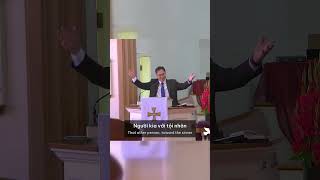
Tội tôi hay xưng nhất với Chúa.
The sin I confess to God most often.
- Hook
- 82
- Weight
- 90
- Alone
- 88
- Council
- 83
Humble confession of failing to love; convicting and faithful.
 Bài GiảngGrace Community Church
 Every Sunday's sermon travels from the livestream to a published video mostly on its own. The work once done by hand now comes down to a few short taps. Nothing is shared and nothing is published until a person approves it.
The whole week
Read it downward. The left side is everything that happens on its own. The right side is every moment a person decides something, and there are only a few.
Enters the sermon title and the scripture passages in the church calendar
The service streams live on YouTube, exactly as it does today
Finds that Sunday’s service video and reads the captions YouTube made for it
Marks where the sermon starts and ends, and says how confident it is
Confirm the start and end on a phone. Nothing has been downloaded or uploaded yet
Trims the sermon out of the service, levels the audio, saves to Drive, and stages the video unlisted
Approve publishing, once the staged version looks right
Public on YouTube, emailed to the congregation and to VietChristian, added to this site and the podcast
Proposes short vertical clips taken from the same sermon
Pick which clips are worth making, then approve each finished clip
The chosen clips are made in the church’s style and go public
Your part
This is the entire human job. Everything not listed here runs without anyone.
Ahead of the service the pastor enters the sermon title and the scripture passages in the planning calendar on vietgrace.org. Everything downstream uses them: the video title, the description and its Bible Gateway links, and the tags on the audio file.
A link arrives by Telegram, a free messaging app much like a text message. It opens the page below: the sermon, the proposed start and end, and the service video itself so the times can be checked by ear. One tap approves. A different tap corrects the times and the system tries again.
What has not happened yet: nothing has been downloaded, trimmed, or uploaded. This approval decides two timestamps and nothing else.


By now the sermon has been trimmed, leveled, saved, and staged on YouTube as unlisted, which means it is viewable with the link but is neither public nor searchable. That staged video is the proof. When it looks right, approving publishing sends it everywhere at once.
What this decides: the moment the congregation and VietChristian receive it. The system never makes a sermon public on its own.
After a sermon is public, the system offers a few short vertical clips, the tall full-screen kind people watch on a phone. They arrive in the same Telegram chat, each with the quote it is built around. Tap the ones worth making and skip the rest. The finished clips are staged unlisted like the sermon was, and each one needs its own approval before it becomes public.
Optional. A sermon is complete without clips. Nothing is made until someone picks, and no clip goes public without a second look.
Between your taps
Six jobs, all unattended. They are the left lane of the diagram above.
Checks the church YouTube channel, identifies Sunday's livestream, and collects the captions YouTube produced for it. Captions are the timed text of what was said.
An AI reads the transcript and finds where the message begins and ends, separating it from worship, announcements, and the closing. It reports how confident it is, so an uncertain week gets flagged.
When YouTube produces no captions that week, a church computer makes the transcript from the audio itself. The recording never leaves that machine, and the week rejoins the normal path.
Downloads only the sermon span rather than the whole service, and copies it out without re-encoding, so the picture stays exactly as it was streamed. Then it levels the sound to the same broadcast loudness every week, because live audio drifts quiet and uneven.
Writes the video and the audio to the church Google Drive and uploads the video to YouTube as unlisted. No email goes out and nothing is public.
Makes the video public, adds it to the Sermons playlist, sends the emails, and writes a short summary in Vietnamese and English for the sermon's page here and for the podcast feed.
Reach
Most people now meet a message mid-scroll rather than by sitting down to an hour. So the same pipeline that trims the sermon takes one more step: it looks for moments that carry a whole thought on their own, and shapes them into short vertical clips that link back to the full sermon.
That reach is also what makes a clip risky. Lifted out of the sermon, a true sentence loses the context that held it steady, and it can land as something the pastor never meant. So no clip is published on its own judgement. Every candidate is graded, then put through a gate that can reject it outright, and a person still approves what goes out.
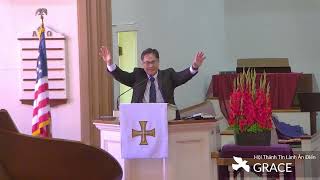 Full sermon · 2026-09-13
The sin I confess to God most often.
Humble confession of failing to love; convicting and faithful.
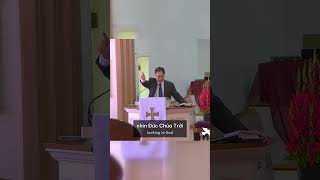
What is real love? Look at the cross.
Cross-defined love, doctrinally sound and self-contained.
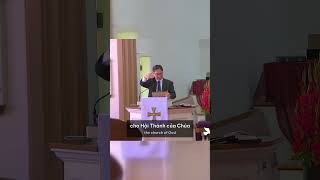
Hatred marks the world. Love marks the church.
World=hatred/Cain vs church=love/Christ; matches text well.
The gate
An AI agent here is an AI given one small job and nothing else. Not a chatbot you hold a conversation with: one question, one answer, and it is done. “Would this clip stop a scroll?” is that kind of job. Nobody asks a single AI “is this good enough to publish?” and takes its word for it, because a model asked a question that broad tends to agree with whoever asked it.
So the judgement is split into six narrow questions across two stages. A clip has to clear all of them before it reaches you.
1 Three marks, out of 100
The proposer scores every candidate it finds. These decide which moments are worth considering at all.
Hook
Would the opening seconds stop a scroll?
this clip: 82
Weight
Does it leave something lasting?
this clip: 90
Stands alone
Does it hold up with the sermon around it removed?
this clip: 88
2 Three lenses, each with a veto
A separate review reads each surviving clip against the sermon it came from. Any one lens below its floor cuts the clip, and the clip's overall mark is its weakest lens, so two strong answers can never outvote one bad one. If the review cannot run at all, the clip is cut rather than passed: it fails closed.
Doctrine
Is the teaching sound?
Checks the clip against Scripture and flags anything off.
floor 75 · this clip 90
Context
Does it survive being lifted out?
Reads the clip against the sermon around it, watching for a true sentence that turns into something the pastor never meant.
floor 70 · this clip 88
Power
Is it worth someone’s time?
Weighs whether it carries real force, or is only a tidy line.
floor 65 · this clip 83
Whatever survives is usually two or three clips out of a whole sermon, and a rejection is recorded with its reason so you can read why. Then it is still yours to pick, and yours to approve one by one. Nothing reaches the Page or the channel without that.
Where it lands
Approving publishing sends the sermon to all of these at once: the video goes public on the church channel and joins the Sermons playlist, the audio goes to VietChristian with a direct download link so it can publish its own copy, the congregation is emailed, and the sermon appears here with its own page, a bilingual summary, an outline, and scripture links, as well as on the podcast feed.
 YouTube
 VietChristian
Two promises
The audio and video of every sermon are kept in the church Google Drive. A separate job makes each file shareable and records its real address, and it now runs every day, so a download link cannot quietly sit broken. The sermons page shows no download button at all until the file has a verified address, because no link is better than a link that fails.
If a sermon's files ever need to be rebuilt, they can be, without disturbing anything the congregation already has: the sermon stays published, the YouTube video is left alone, and no email is sent a second time. The audio email to VietChristian is held back entirely unless a working public download link exists, so the publisher never receives a message it cannot use.